
 EN
EN ES
ES ITA
ITA DE
DE FR
FROFDR for Short-Distance High-Precision Measurement

01 Introduction
OTDR (Optical Time Domain Reflectometry) and OFDR (Optical Frequency Domain Reflectometry) are two commonly used analysis and testing techniques in optical fiber communications. OTDR transmits pulsed light into an optical fiber and receives the backscattered light signals from the link to measure event distance, loss, reflection, etc. It is widely used in fiber network fault diagnosis and operation/maintenance. OFDR, on the other hand, combines optical frequency domain analysis with optical heterodyne detection. A linearly swept laser source emits light and splits it into a signal arm and a reference arm. The light reflected from each position along the signal arm interferes with the reference light to generate a beat frequency. The frequency and intensity of the received signal are used to determine the location and characteristics of events. Additionally, spectral shifts allow "sensing" of strain and temperature changes along the fiber. By employing frequency domain analysis and coherent detection, OFDR effectively overcomes the trade-off between spatial resolution and dynamic range inherent in OTDR. It ensures both high dynamic range and extremely high resolution over distance, with measurement dead zones at the sub-micron level, enabling high-precision, high-sensitivity distributed measurements.
02 Optical Component Testing
Unlike OTDR, which is used for long-distance fiber network measurement, OFDR is applied to component-level fault location and testing. Figure 1 shows the test results of an FC/APC patch cord connector measured with an OFDR device. As can be seen from Figure 1, when the FC/APC connector is not covered with a dust cap, a peak appears at the far end. This peak is caused by Fresnel reflection as light travels from the fiber (high refractive index) to air (low refractive index). Figure 2 shows the test results when the FC/APC connector is covered with a dust cap. At the far end, two peaks appear: the first peak is from the fiber end face to air, and the second peak is from the end face of the dust cap.
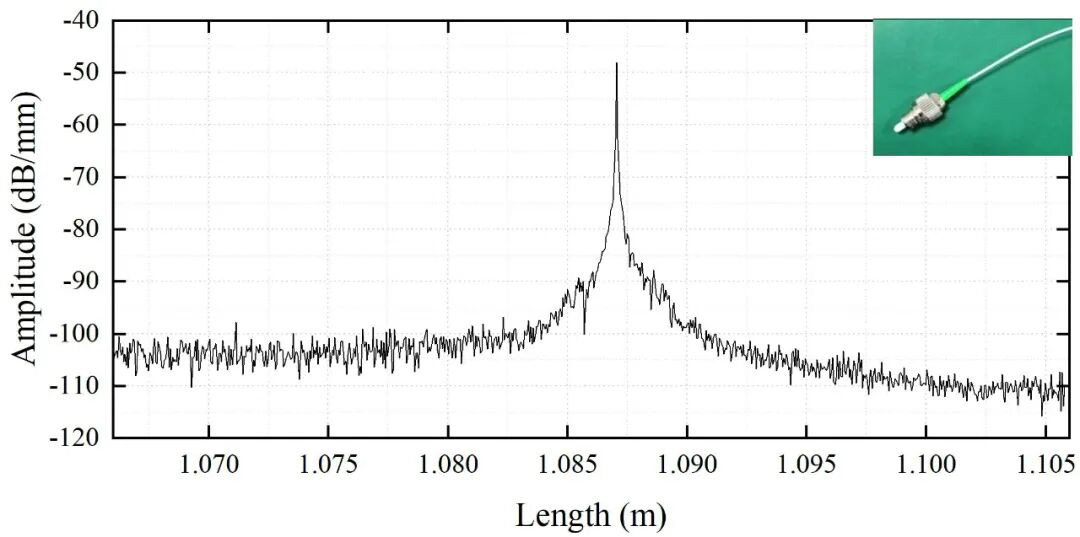
Figure 1. Measurement result of FC/APC patch cord without dust cap
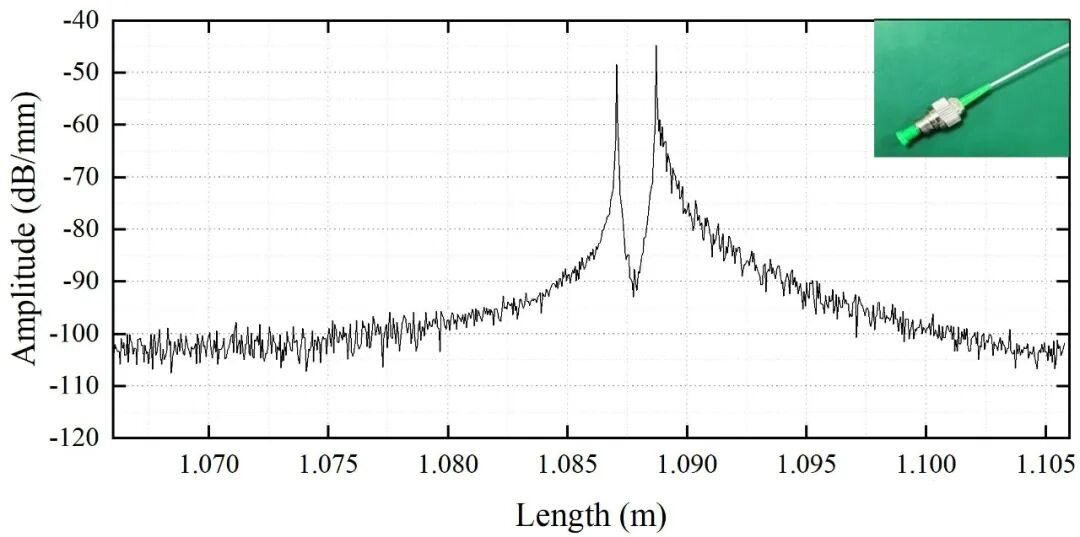
Figure 2. Measurement result of FC/APC patch cord with dust cap
Figure 3 shows test results for a qualified and a defective 3 dB polarization-maintaining coupler. The results indicate that the defective coupler exhibits a high reflection peak at the coupling point, suggesting poor coupling performance.
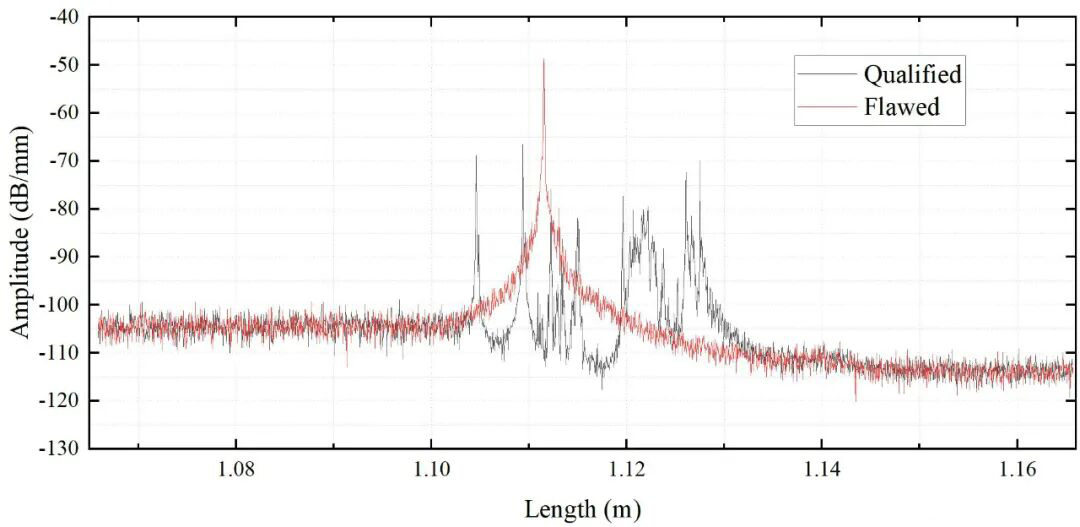
Figure 3. Measurement results of a qualified and a defective 3 dB polarization-maintaining coupler
03 Conclusion
The OFDR device offers measurement without dead zones and extremely high spatial resolution. It can effectively identify the condition of FC/APC patch cord connectors and small defects inside polarization-maintaining couplers. The dust cap causes two reflection peaks at the end of the patch cord; small defects result in a high reflection peak at the coupler's coupling point. These results demonstrate that OFDR meets the requirements for short-distance, high-precision measurements and can be used for optical component fault location, internal analysis of optical modules, and other applications.